Tuesday, 3 December 2024

I made a corpus-based material AGAIN - it wasn't any easier.

Well, things didn't turn out exactly how I planned.

Welcome back to my blog! I kind of alluded to this with the "final post", how I would be doing more posts here. I didn't think it'd be the same class, but hey, let's hope it works out this time.

Same as last year, our first assignment this year was creating a corpus-based teaching material. Since my usual assignment buddies aren't retaking the class, I had to make some new friends for this assignment. This time, I worked in a group of 3 with Lara and Merve, who were kind enough to offer me a spot.


Our choice of corpus database was CorpusMate, designed by the creator of SkELL which I used last year. It functions near-identically to SkELL, only it is tweaked and streamlined a bit to suit young learners better. In addition to providing it as a resource in the activity, it was quite useful for us in coming up with example activities.

If you would like to see the work before I go into more detail, you can check it out here.


The objective of the activity is to teach students the different use cases of "could" and "would", how they fit into different sentence structures, and differences between the two. It being only two similarly-written words with somewhat close meanings made it seem like a simple topic at first, perhaps even too much so. But once you look into it more deeply you see that there are numerous meanings each of the words can have in a sentence. Whereas my work last year focused more on the tasks in the material, I think the biggest benefit a student can gain from this activity is examining the corpus and intuitively learning just how many different ways these words can be used.

In addition to the activity, differently from last year if I remember correctly, we also created a lesson plan to go along with it. It is a form of lesson plan based on the ASSURE model, which utilizes our modern understanding of education with greater focus on student participation and the facilities today's technology provides. It is really intuitive, you can get a solid understanding just by examining some examples of it. Even the name is an acronym! Well, sort of. Once you've checked out our material, you can take a look at the lesson plan here.

Thanks for reading my post... about a corpus-based material... again. Let's hope this year turns out for the better! See you on the next post!

Tuesday, 23 January 2024

The Final Post

 Hi all!

As the term comes to a close, I'm going to have to say goodbye to posting here. It's been quite a year with the course, with all the various tasks I did, but I'm afraid this will be my last post here. Before I leave, there are a couple questions I'll be answering about my time with this course, which you can find below. Hope you enjoyed following along with my blog. 

Take care!

1- What are the strengths and weaknesses of the course?

All the various materials we had to do made me feel like I was doing actual teacher work, which I was doing to an extent, and I really enjoyed that. On the other hands, there were a lot of times where I felt overwhelmed with the assignments, sometimes due to their sheer size or sometimes due to the time frame I had to complete them in but honestly, I couldn't tell you if that was a course-weakness or a Pol-weakness. Overall, I can confidently say that I have become a better teacher because of this course.

2- What did you find easy or difficult about the course?

Figuring out what to do was always the most difficult part of every assignment for me. A lot of times it was difficult for me to get started, not knowing which parts I should tackle first, what topic/unit to focus on etc. However, thanks in large part to excellent feedback our instructor gave us every time, I found myself steadily getting better at handling those issues.

3- What was your most and least favourite task? Explain your choices.

My favorite has to be the video we created for a Flipped Classroom material. As I said even in the title of the blog post for that assignment, it was extremely fun creating the video with my friends. I'd say my least favorite would be the corpus-based material that we did. The early parts of the assignment where we had to figure out our topic, do our research and come up with examples felt really tedious. The later part of the assignment where we put everything together on Canva was still very fun, however.

4- What would be your suggestion to improve it?

I think only slightly revising the tasks would be enough to make this a lot of people's favorite course.

5- What would you tell to the students who would take this course next year?

I'd tell them to pay more attention in the classroom than I did, and to manage their time better doing the assignments. There have been several times where I felt burnt out or had to sacrifice from the quality of an assignment simply because I didn't have enough time.

6- How would this course contribute to your professional development?

With every assignment we had I felt like a teacher creating activities and materials that I myself would really enjoy if I were a student. Everything we did helped me become better at creating fun and beneficial materials for my future students. I'm sure these will play a very important role in my future career. 

I was thinking while writing this, I will be taking another class next year that I didn't take when I was supposed to, so I might come back to this blog after all...

Monday, 22 January 2024

We created an AI-integrated teaching material

Hi all!

Continuing full speed with our AI-related works, this week my friends Salih KarakaşBora Sarakurt and I created another material utilizing AI. This time, we used what's called a "generative AI" to assist in our imaginary students' learning process. Here's how it went.

First, after looking through the high school prep course book we had, we decided that our topic would be "Animals and Nature", specifically just animals (as it is quite an extensive unit). Then, we had to come up with what our pre-task, target and post-task activities would be. After giving a simple vocabulary exercise for the pre-task, we started the main activity. We would task the students with writing a short paragraph as if they'd spent a day in a zoo. Then, they would give a prompt to ChatGPT to write a similar paragraph, and compare that to their own. We wanted to see if the students could intuitively pick up different styles of writing just by the example given by ChatGPT.

If you'd like to see the full material, you can find it here.


See you in the next post!

Friday, 12 January 2024

Here's how you can integrate AR/VR into your teching. Or at least how we did it

 Hi again!

We had another assignment for our Current Issues course, this time to create an Augmented/Virtual Reality based teaching material. Once again, I worked with my friends Salih Karakaş and Bora Sarakurt.

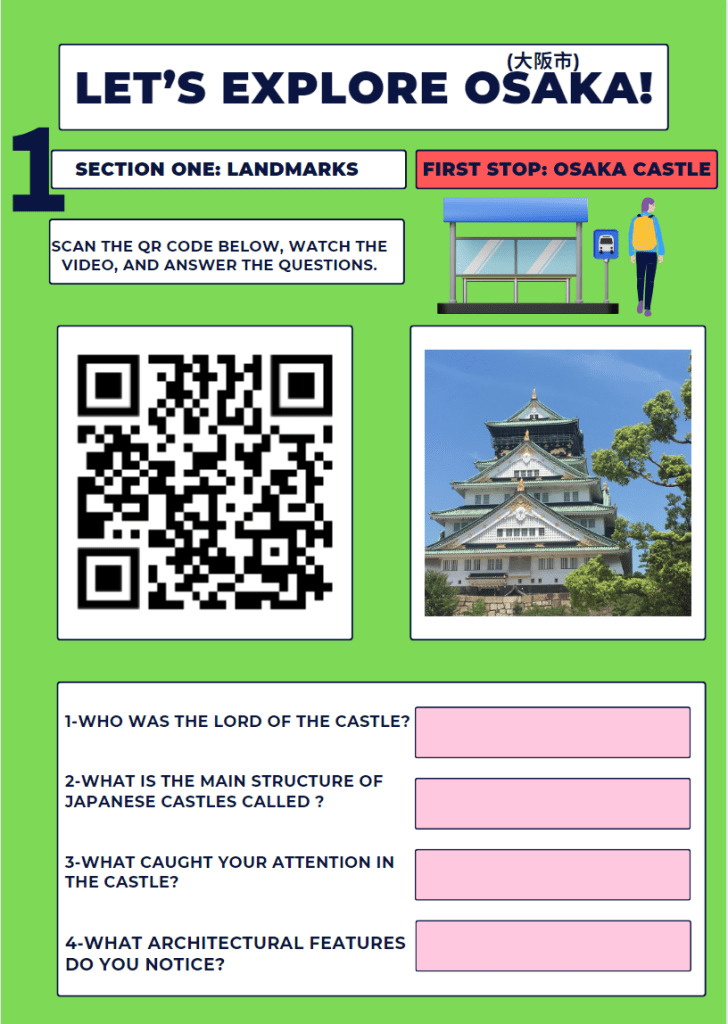
For the assignment, we had to provide materials and create a worksheet to introduce various aspects of a city. We chose the city of Osaka, in Japan. After deciding on the landmarks, the museum, and the food that we were going to talk about, Bora and I looked for videos and wrote the questions, while Salih (as usual) created a beautifully designed sheet. Here is the link to the Worksheet. 

For general educational purposes, utilizing AR and VR technologies is a fantastic idea. It is important, however, to keep in mind what the goal of using these technologies is. As an English teacher, you have to find a way to use AR/VR in a way that will benefit the students' language skills. That is what we tried to do with our worksheet. And if you ask me, I'd say it was an overall success.

Hope you like the worksheet! See you next time.

The FINAL Final Post

 Hello once more! It's time for me to say goodbye... again. Going through this course, even for a second time, has genuinely been such a...